Abstract
Whistleblowers play a crucial role in promoting corporate transparency, accountability, and ethical governance by exposing fraud, corruption, financial misconduct, environmental violations, human rights abuses, and other unlawful activities that may otherwise remain concealed. Effective whistleblower protection laws encourage individuals to report wrongdoing without fear of retaliation, thereby strengthening regulatory compliance, investor confidence, and public trust in corporate institutions. However, despite increasing international recognition of the importance of whistleblower protection, employees and other reporting persons continue to face significant legal, professional, and personal risks, including dismissal, harassment, discrimination, intimidation, and reputational harm. Various international instruments and national legal frameworks, including the United Nations Convention against Corruption (UNCAC), the OECD Guidelines for Multinational Enterprises, the European Union Whistleblower Protection Directive, the United States Sarbanes-Oxley Act and Dodd-Frank Act, and India's Companies Act, 2013, have established mechanisms to protect whistleblowers and encourage ethical corporate governance. This paper critically examines the legal relationship between whistleblower protection laws and corporate governance by analyzing international legal standards, comparative legislative frameworks, judicial developments, and contemporary corporate compliance practices. It further evaluates the challenges affecting the implementation of whistleblower protection regimes and proposes legal reforms aimed at strengthening reporting mechanisms, enhancing corporate accountability, preventing retaliation, and promoting ethical business conduct. The study concludes that robust whistleblower protection is an indispensable component of modern corporate governance and sustainable business practices in the global economy.
- Whistleblower Protection
- Corporate Governance
- Corporate Compliance
- Transparency
- Accountability
- Anti-Corruption
- Companies Act
- Ethical Governance
- Regulatory Compliance
- Corporate Ethics
Introduction#
Corporate governance has become a central pillar of modern business regulation, emphasizing transparency, accountability, ethical conduct, and responsible decision-making within corporate organizations. In an increasingly globalized and interconnected economy, corporations significantly influence economic development, financial markets, employment, environmental sustainability, and public welfare. Consequently, effective corporate governance mechanisms are essential for maintaining investor confidence, protecting stakeholders, ensuring regulatory compliance, and promoting sustainable economic growth. Among these mechanisms, whistleblower protection has emerged as one of the most effective tools for detecting and preventing corporate misconduct. Whistleblowers are individuals who disclose information regarding illegal, unethical, fraudulent, or harmful activities occurring within an organization to competent authorities or designated internal bodies. Their disclosures often expose financial fraud, corruption, tax evasion, insider trading, money laundering, environmental violations, workplace harassment, human rights abuses, and other forms of corporate wrongdoing that may otherwise remain undetected. Despite their significant contribution to corporate accountability, whistleblowers frequently encounter retaliation in the form of dismissal, demotion, harassment, discrimination, threats, blacklisting, and reputational damage. Such retaliation discourages reporting and undermines the effectiveness of corporate compliance programmes. Recognizing these concerns, international organizations and national governments have increasingly developed legal frameworks aimed at protecting whistleblowers while encouraging ethical corporate behaviour. International instruments such as the United Nations Convention against Corruption (UNCAC), the OECD Guidelines for Multinational Enterprises, and the G20 High-Level Principles for the Effective Protection of Whistleblowers emphasize the importance of secure reporting mechanisms and legal safeguards against retaliation.
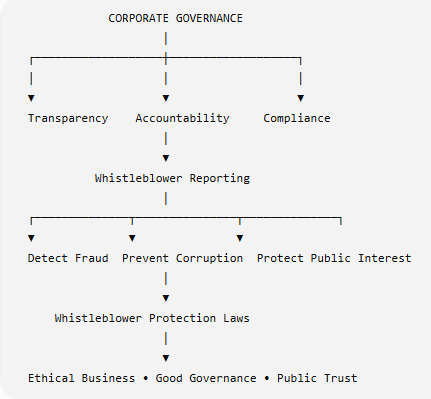
Figure: Conceptual Background
Comparative jurisdictions have adopted comprehensive whistleblower protection legislation, including the United States through the Sarbanes-Oxley Act, 2002 and the Dodd-Frank Wall Street Reform and Consumer Protection Act, 2010, as well as the European Union through Directive (EU) 2019/1937 on the Protection of Persons Who Report Breaches of Union Law. In India, whistleblower protection is reflected through the Companies Act, 2013, the Securities and Exchange Board of India (SEBI) regulations, and the Whistle Blowers Protection Act, 2014, although challenges relating to implementation and enforcement continue to exist. Modern corporate governance increasingly recognizes whistleblower protection not merely as a compliance requirement but as a fundamental component of ethical leadership, risk management, and corporate sustainability. The emergence of environmental, social, and governance (ESG) standards has further reinforced the importance of internal reporting systems and organizational integrity. This paper critically examines the legal relationship between whistleblower protection laws and corporate governance through an analysis of international legal standards, comparative legislation, regulatory practices, and judicial developments. It evaluates contemporary challenges affecting whistleblower protection and proposes reforms aimed at strengthening legal safeguards, enhancing corporate transparency, and fostering a culture of accountability within modern business organizations.
International and National Legal Framework Governing Whistleblower Protection and Corporate Governance#
The legal framework governing whistleblower protection has evolved considerably over the past two decades as governments and international organizations have recognized the vital role of whistleblowers in promoting transparency, preventing corruption, and strengthening corporate governance. At the international level, the United Nations Convention against Corruption (UNCAC), 2003, represents one of the most significant legal instruments addressing whistleblower protection. Article 33 encourages States Parties to incorporate appropriate measures to protect individuals who report corruption-related offences in good faith from unjustified retaliation. Similarly, the Organisation for Economic Co-operation and Development (OECD) Guidelines for Multinational Enterprises promote responsible business conduct by encouraging companies to establish internal reporting mechanisms and protect employees who disclose unethical or illegal activities. The G20 High-Level Principles for the Effective Protection of Whistleblowers (2019) further recommend comprehensive legal safeguards, confidentiality, protection against retaliation, and accessible reporting channels as essential elements of good governance. Within the European Union, Directive (EU) 2019/1937 on the Protection of Persons Who Report Breaches of Union Law establishes one of the most comprehensive whistleblower protection regimes by requiring both public and private organizations to create secure internal reporting systems, protect the identity of whistleblowers, prohibit retaliation, and provide effective legal remedies. In the United States, whistleblower protection has been significantly strengthened through the Sarbanes-Oxley Act, 2002 (SOX), enacted after major corporate scandals such as Enron and WorldCom. SOX requires publicly traded companies to establish confidential procedures for reporting accounting irregularities while prohibiting retaliation against employees who disclose corporate fraud. The Dodd-Frank Wall Street Reform and Consumer Protection Act, 2010 expanded these protections by introducing financial incentives for individuals reporting securities law violations to the Securities and Exchange Commission (SEC) and enhancing anti-retaliation safeguards. In India, whistleblower protection is governed through multiple legal instruments. The Companies Act, 2013, under Section 177, requires specified companies to establish a vigil mechanism enabling directors and employees to report genuine concerns regarding unethical conduct, fraud, or violations of company policies. The SEBI (Listing Obligations and Disclosure Requirements) Regulations, 2015 further require listed companies to maintain effective whistleblower mechanisms as part of sound corporate governance practices. Additionally, the Whistle Blowers Protection Act, 2014, seeks to protect individuals who disclose corruption, misuse of power, or criminal misconduct within public institutions, although its implementation remains limited. Corporate governance standards have also increasingly incorporated whistleblower protection through internal compliance programmes, ethics committees, audit committees, codes of conduct, and risk management systems. Collectively, these international conventions, regional directives, national statutes, and corporate governance regulations establish that effective whistleblower protection is fundamental to ensuring ethical business practices, preventing financial misconduct, protecting investors, and promoting accountability within both public and private organizations. Nevertheless, variations among national legal systems continue to create implementation challenges, highlighting the need for stronger enforcement mechanisms, greater legal harmonization, and enhanced protection against retaliation.
Contemporary Challenges in Whistleblower Protection and Corporate Governance#
Despite significant legislative developments, whistleblowers continue to face numerous legal, institutional, and practical challenges that undermine the effectiveness of whistleblower protection laws and corporate governance mechanisms. One of the most persistent concerns is retaliation, which may include dismissal, suspension, demotion, salary reduction, workplace harassment, intimidation, discrimination, blacklisting, or reputational damage. Fear of such consequences often discourages employees from reporting corporate misconduct, thereby allowing fraudulent or unethical practices to continue undetected. Another major challenge relates to the lack of confidentiality in reporting mechanisms. In many organizations, inadequate safeguards expose the identity of whistleblowers, increasing their vulnerability to retaliation and reducing confidence in internal reporting systems. The absence of effective anonymous reporting channels further limits the willingness of employees to disclose wrongdoing. Weak implementation and enforcement of whistleblower protection laws also remain significant obstacles, particularly in jurisdictions where regulatory authorities lack sufficient resources, institutional independence, or investigative capacity. In some countries, legal protections exist primarily on paper but are rarely enforced in practice, resulting in limited accountability for employers who retaliate against whistleblowers. Organizational culture presents another important challenge. Many corporations continue to prioritize institutional reputation over transparency, creating workplace environments in which employees fear reporting misconduct because of concerns regarding career advancement, loyalty expectations, or social stigma. The increasing complexity of multinational corporations also creates cross-border legal challenges, as whistleblowers may report misconduct involving multiple jurisdictions with differing legal standards governing confidentiality, employment rights, and regulatory cooperation. The rapid expansion of digital technologies has introduced additional concerns relating to cybersecurity, electronic evidence, data privacy, and secure communication channels. While digital reporting platforms facilitate easier disclosure, they also create risks of unauthorized access, data breaches, and surveillance that may compromise whistleblower confidentiality. Another challenge involves distinguishing genuine whistleblowing from malicious or false complaints, requiring organizations to develop fair investigative procedures that protect both whistleblowers and individuals accused of misconduct. In addition, inadequate legal awareness among employees often limits the effectiveness of whistleblower protection regimes, as many individuals remain unaware of their reporting rights or available legal remedies. Small and medium-sized enterprises frequently encounter resource constraints that hinder the establishment of comprehensive compliance programmes and secure reporting mechanisms. Furthermore, emerging environmental, social, and governance (ESG) obligations have expanded the scope of whistleblower disclosures beyond financial misconduct to include environmental violations, labour rights abuses, human rights concerns, and corporate sustainability issues, requiring broader legal protections. Addressing these contemporary challenges requires stronger anti-retaliation measures, confidential and anonymous reporting systems, independent investigations, effective judicial remedies, enhanced regulatory oversight, corporate ethics training, and organizational cultures that encourage integrity and transparency. Such reforms are essential to ensuring that whistleblowers can report wrongdoing without fear while strengthening public trust, investor confidence, and responsible corporate governance.
Future Directions and Legal Reforms for Strengthening Whistleblower Protection#
The evolving landscape of corporate governance requires whistleblower protection laws to develop beyond traditional anti-retaliation measures and become integral components of organizational ethics, regulatory compliance, and sustainable business governance. Future legal reforms should prioritize the enactment of comprehensive whistleblower legislation that provides clear definitions of protected disclosures, broad coverage across both public and private sectors, and effective legal remedies against retaliation. Governments should establish independent oversight authorities empowered to receive complaints, investigate retaliation, enforce compliance, and impose meaningful penalties on organizations that violate whistleblower protections. Corporate governance regulations should require organizations to maintain secure, confidential, and where appropriate, anonymous reporting channels supported by modern digital technologies with strong cybersecurity safeguards. Audit committees and independent ethics officers should regularly monitor the effectiveness of whistleblower mechanisms and ensure impartial investigation of reported misconduct.
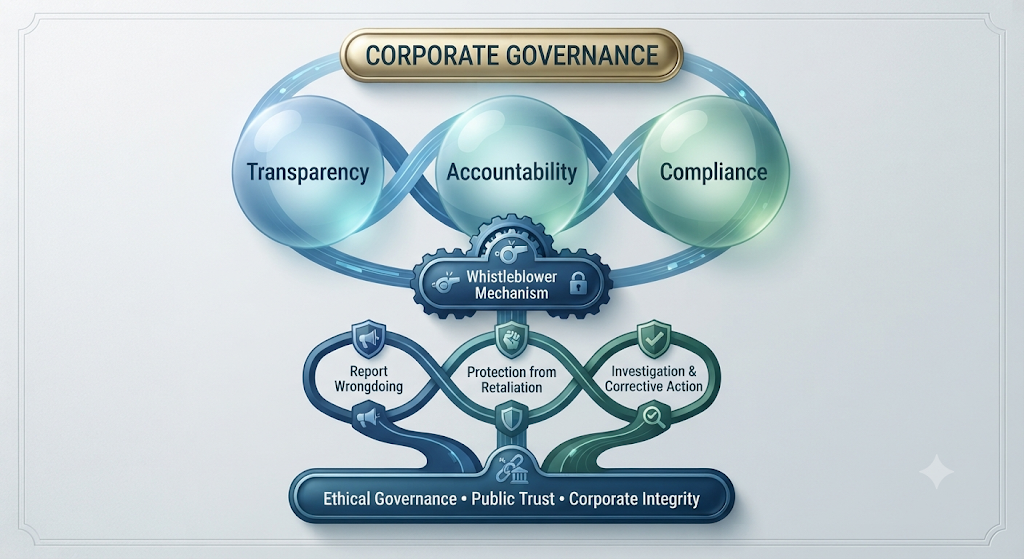
Figure: Whistleblower Protection Laws and Corporate Governance
Greater legal emphasis should also be placed on protecting whistleblowers who disclose environmental violations, human rights abuses, financial fraud, tax evasion, workplace discrimination, and other matters affecting public interest and environmental, social, and governance (ESG) standards. International cooperation should be strengthened through organizations such as the United Nations, OECD, International Labour Organization (ILO), and regional institutions to promote harmonized legal standards and facilitate cross-border investigations involving multinational corporations. Companies should integrate whistleblower protection into broader corporate compliance programmes by adopting codes of ethics, regular employee training, awareness campaigns, and leadership initiatives that encourage transparency and ethical decision-making. Anti-retaliation provisions should include reinstatement, compensation, legal assistance, psychological support, and protection against indirect forms of victimization such as blacklisting or career discrimination. Regulatory authorities should encourage periodic external audits of whistleblower systems to evaluate compliance and identify institutional weaknesses. Advances in digital technology should be utilized to develop encrypted reporting platforms that protect confidentiality while ensuring secure evidence preservation and efficient case management. Public awareness initiatives should educate employees, shareholders, and stakeholders regarding the social importance of whistleblowing and the legal safeguards available to reporting persons. Ultimately, effective whistleblower protection is not merely a legal obligation but a cornerstone of responsible corporate governance and democratic accountability. By strengthening legal safeguards, fostering ethical corporate cultures, enhancing regulatory enforcement, and promoting transparency, governments and business organizations can create an environment in which individuals are empowered to report wrongdoing without fear of retaliation. Such reforms will contribute to stronger corporate integrity, increased investor confidence, improved regulatory compliance, sustainable economic development, and greater public trust in modern corporate institutions.
Conclusion#
Whistleblower protection has emerged as an indispensable component of modern corporate governance by promoting transparency, accountability, ethical business conduct, and regulatory compliance. In an increasingly complex global business environment, whistleblowers perform a vital public function by exposing fraud, corruption, financial irregularities, environmental violations, workplace misconduct, human rights abuses, and other unlawful activities that may otherwise remain concealed. Effective legal protection encourages individuals to report wrongdoing without fear of retaliation, thereby strengthening organizational integrity and reinforcing public confidence in corporate institutions. International legal instruments such as the United Nations Convention against Corruption (UNCAC), the OECD Guidelines for Multinational Enterprises, the European Union Whistleblower Protection Directive, and national laws including the Sarbanes-Oxley Act, the Dodd-Frank Act, the Companies Act, 2013, and the Whistle Blowers Protection Act, 2014 collectively recognize that protecting whistleblowers is fundamental to preventing corruption and ensuring responsible corporate governance. Nevertheless, practical implementation continues to face numerous challenges, including retaliation, inadequate confidentiality, weak enforcement, organizational resistance, insufficient awareness, and inconsistencies among national legal frameworks. These challenges are further intensified by globalization, cross-border corporate operations, digital communication technologies, cybersecurity concerns, and the expanding scope of environmental, social, and governance (ESG) obligations. Addressing these issues requires stronger anti-retaliation measures, independent oversight authorities, confidential and anonymous reporting systems, effective judicial remedies, and comprehensive corporate compliance programmes. Organizations must cultivate ethical workplace cultures in which employees are encouraged to report genuine concerns without fear of discrimination or professional disadvantage. Leadership commitment, regular ethics training, transparent investigation procedures, and periodic audits of whistleblower mechanisms should become integral components of corporate governance strategies. Governments should continue modernizing whistleblower legislation by incorporating technological safeguards, cross-border cooperation, and broader protection for disclosures relating to public interest, environmental sustainability, digital security, and corporate responsibility. International collaboration among regulatory authorities and multinational corporations is equally essential to address transnational corporate misconduct and harmonize legal standards governing whistleblower protection. Ultimately, effective whistleblower protection is not merely a statutory compliance requirement but a cornerstone of good governance, democratic accountability, and sustainable economic development. By strengthening legal safeguards, promoting ethical corporate behaviour, and ensuring accountability at every organizational level, whistleblower protection laws contribute significantly to preventing corporate misconduct, protecting stakeholder interests, enhancing investor confidence, and reinforcing the rule of law. A transparent and supportive reporting environment enables corporations to detect risks at an early stage, improve governance practices, and build resilient institutions capable of maintaining long-term public trust and responsible business conduct.
Works Cited#
- Association of Certified Fraud Examiners. (2024). Occupational Fraud 2024: A Report to the Nations. ACFE.
- European Parliament and Council of the European Union. (2019). Directive (EU) 2019/1937 on the Protection of Persons Who Report Breaches of Union Law. Official Journal of the European Union.
- Government of India. (2013). The Companies Act, 2013. Ministry of Corporate Affairs.
- Government of India. (2014). The Whistle Blowers Protection Act, 2014. Ministry of Law and Justice.
- Organisation for Economic Co-operation and Development. (2023). OECD Guidelines for Multinational Enterprises on Responsible Business Conduct. OECD Publishing.
- Securities and Exchange Board of India. (2015). SEBI (Listing Obligations and Disclosure Requirements) Regulations, 2015. SEBI.
- United Nations. (2003). United Nations Convention against Corruption (UNCAC). United Nations.
- United States Congress. (2002). Sarbanes-Oxley Act of 2002.
- United States Congress. (2010). Dodd-Frank Wall Street Reform and Consumer Protection Act.
- Transparency International. (2024). Corruption Perceptions Index 2024. Transparency International.
- International Labour Organization. (2022). Safe and Healthy Working Environment: Fundamental Principles and Rights at Work. ILO.
- Near, J. P., & Miceli, M. P. (2016). After the wrongdoing: What managers should know about whistleblowing. Business Horizons, 59(1), 105–114.
- Brown, A. J. (Ed.). (2014). International Handbook on Whistleblowing Research. Edward Elgar Publishing.
- Devine, T. (2019). The Corporate Whistleblower's Survival Guide (2nd ed.). Berrett-Koehler Publishers.
- Lewis, D., & Vandekerckhove, W. (Eds.). (2015). Developments in Whistleblowing Research. International Whistleblowing Research Network.
- Callahan, E. S., & Dworkin, T. M. (2000). The state of state whistleblower protection. American Business Law Journal, 38(1), 99–175.
- International Organization for Standardization. (2021). ISO 37002:2021 Whistleblowing Management Systems—Guidelines. ISO.
- Miceli, M. P., Near, J. P., & Dworkin, T. M. (2013). Whistle-Blowing in Organizations. Routledge.
- Organisation for Economic Co-operation and Development. (2016). Committing to Effective Whistleblower Protection. OECD Publishing.
- Transparency International. (2013). International Principles for Whistleblower Legislation. Transparency International.
" The Legal Framework Governing Space Activities and Commercial Space Exploration